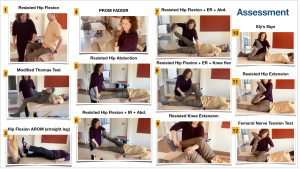
Description Hip flexor strains are a common sports injury. Learn the anatomy, assessment and acupuncture point locations for the hip flexor muscles. Treatment of these muscles can help with injury recovery and prevention, as well as enhance athletic performance. This course will allow the student to feel more confident in the assessment and acupuncture treatment of the hip flexor muscles.
Goals and Objectives
1. Develop clarity about the anatomy of the iliacus, psoas, rectus femoris, tensor fascia latae, sartorius and pectineus.
2. Learn to assess and palpate these areas with sensitivity and awareness of neurovascular structures.
3. Learn most common locations of hip flexor muscle strains.
4. Supervised practice for palpation and needling.
5. Learn how to use electrical stimulation effectively.
If you or someone you love suffers from type 2 diabetes, then you understand the challenges that come with this disease. Despite adhering to a medication regimen and making positive lifestyle changes, those dealing with diabetes might still struggle with managing blood sugar levels. Frustration and fatigue can be constant companions. But did you know that acupuncture can help with diabetes management? Whether you are skeptical or desperate for some help, it’s worth looking into acupuncture as a source of hope and help in managing this often-tricky disease.continue reading »
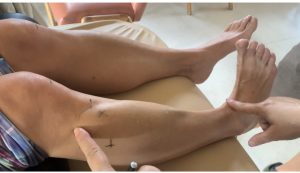
Ankle sprains are a common orthopedic complaint. After an ankle sprain there is an increased risk of recurrent sprains and functional ankle instability. Appropriate evaluation and treatment can decrease the likelihood of these complications. This course will include an overview of the most common mechanism of injury, the relevant anatomy, orthopedic assessment and concise acupuncture treatment to address pain, mobility and stability.
Goals and Objectives
1. Identify the most commonly injured ankle ligament and the associated mechanism of injury.
2. Learn evaluation of a patient presenting with an ankle injury and/or chronic instability.
3. Practice assessment, including orthopedic tests and palpation.
4. Supervised practice for needling key anatomical regions
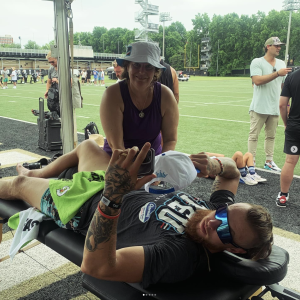
Tight End University (TEU), an elite offseason training camp for NFL tight ends, has become a cornerstone for players aiming to hone their skills and gain a competitive edge. Offering athletes access to a premier team of recovery professionals, TEU is a sanctuary for athletes seeking excellence. For the third consecutive year, Dr. Jenny Nieters was honored to participate, providing support to the athletes.
The Intersection of Traditional and Modern Sports Medicine
Dr. Jenny Nieters, a Doctor of Acupuncture and Chinese Medicine (DACM) is known for her innovative application of traditional acupuncture techniques tailored to the unique needs of athletes.
Athletes benefit significantly from acupuncture in a variety of ways.
1. Vasodilation
Acupuncture can stimulate the release of nitric oxide (NO) and other vasodilatory substances, which relax the smooth muscles of blood vessels. This relaxation leads to vasodilation, or the widening of blood vessels, allowing increased blood flow through the capillaries and enhancing overall microcirculation.
2. Neurovascular Modulation
Acupuncture needles inserted into specific points can stimulate nerve endings and initiate a cascade of neurovascular responses. This stimulation activates the autonomic nervous system, particularly the parasympathetic branch, which promotes vasodilation and improves blood flow to targeted areas.
3. Local Inflammatory Response
The insertion of acupuncture needles causes a minor, controlled inflammatory response at the site of needling. This localized inflammation results in the release of various chemical mediators, including histamines and prostaglandins, which increase capillary permeability and improve blood flow to the affected area.
4. Endorphin Release
Acupuncture triggers the release of endorphins and other neuropeptides, which have systemic effects, including the modulation of blood flow. Endorphins can influence cardiovascular function and enhance the microcirculation by improving the efficiency of blood flow through the microvascular network.
5. Reduction of Blood Viscosity
Acupuncture may help reduce blood viscosity, making it easier for blood to flow through small vessels. This reduction in viscosity is partly due to the improved balance of autonomic nervous system functions and the reduction of stress hormones, which can affect blood consistency.
6. Enhanced Cellular Metabolism
Improved microcirculation leads to better oxygen and nutrient delivery to tissues, enhancing cellular metabolism and energy production. Acupuncture supports this process by optimizing the body’s physiological functions and promoting a more efficient exchange of oxygen and carbon dioxide at the cellular level.
Practical Implications for Athletes
For athletes, enhanced microcirculation means better muscle recovery, reduced inflammation, and faster healing of injuries. By improving blood flow to the muscles and other tissues, acupuncture helps deliver essential nutrients and oxygen while removing metabolic waste products, thereby supporting optimal performance and quicker recovery times.
Scientific Evidence
Several studies have supported the idea that acupuncture improves microcirculation. For instance, research has shown that acupuncture increases skin and muscle blood flow, as evidenced by thermographic imaging and laser Doppler flowmetry. These studies demonstrate that acupuncture can have a measurable impact on blood flow dynamics, validating traditional claims with modern scientific methods.
Here are some references to studies that support the idea that acupuncture improves microcirculation, showing increased skin and muscle blood flow through thermographic imaging and laser Doppler flowmetry: continue reading »
If you suffer from stress and anxiety (and really, who doesn’t?) and you are looking for better and holistic ways to cope, you might want to consider the combination of meditation and acupuncture. While there is a big difference between the two, what they bring together is a formidable duo in pursuit of complete wellbeing. continue reading »
I found Dr. John Nieter’s through his podcast on iTunes about 2 years ago. Being diagnosed with Crohn’s disease 12 years ago, I had struggled with my health and had not been able to find much relief at that time. Doctor’s put me on strong medications, and I eventually went off them due to the side effects and reactions that occurred.
Living in Arizona, I had been seeing several different doctor’s, as well as holistic practitioners, in order to... Read more »
I’ve been a regular patient of John Nieters for over a year now and have to admit he has helped save my life. John and his staff have helped give me the tools to bring more awareness to my own mind and body. Ultimately giving me more control over my own health. When I first started seeing John I was suffering from such great fatigue, amongst other issues, that it took me four to six hours before I could... Read more »
I have been coming to see John Nieters for over seven years. I was a train wreck when I came to him with a chronic, progressive disease that Western doctors predicted could land me in a wheel chair. I’m happy to say that not only has my condition not worsened, I’m significantly healthier than even before I first got hit with my disease. John literally saved my life. I have recommended him to at least 10 other people and those... Read more »
This website is for information purposes, only. It is not meant to sell anything, or anyone on a particular product, course of action, or way of thinking. By providing information we are not diagnosing, curing, mitigating, treating or preventing any disease. We advise that before embarking on any sort of natural treatment regime to seek the advice of a licensed health professional.
 Sports Acupuncture: Hip Flexor Muscles